Dispatch software for transport: two practical worlds
Transport dispatching software can be structured very differently. In traditional transport processes, orders, vehicles, drivers, routes, and status updates are central. In material-oriented companies, a single trip also affects inventory levels, material accounts, and other business processes.
The practical examples of Swynoo and Interspan show how much these requirements can differ and how Comitas has mapped the respective process world in software.
What a transport dispatching software must cover
The common core extends from order entry and planning to mobile execution, verification, and invoicing. Differences arise where industry-specific resources and business processes are added.
For a transport company, the connection between vehicle, driver, route, GPS status, and invoicing can already cover the core process. In the timber and materials trade, warehousing, material movements, purchasing, sales, and financial processes also become part of the same system landscape.
Swynoo: Platform for transport and dispatching
Swynoo is a solution for transport and logistics companies that can be used as a standardized platform for different businesses.
The solution includes, among other things:
- Order management and scheduling
- tour
- Vehicle and chauffeur planning
- Driver apps for iOS, Android and PWA
- GPS and TomTom integration
- Customer Portal
- invoicing
- Interfaces to accounting
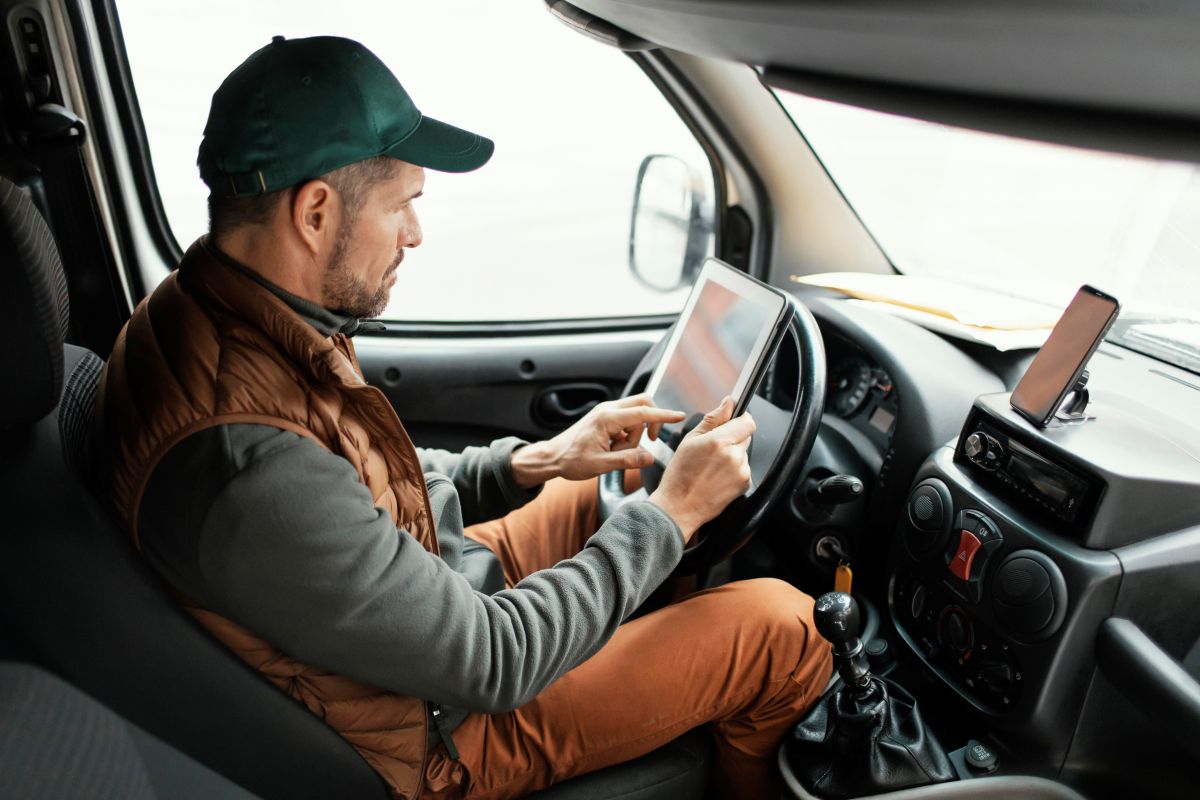
The driver receives orders via mobile device and can report status updates from the current route. GPS data and navigation help dispatchers keep track of the day's progress. Order processing, execution, and invoicing remain within a single, integrated digital process.
Interspan: Individual planning tool for materials and transport
Comitas developed a separate and more individualized dispatch tool for Interspan Tschopp AG, which is active in the residual wood trade as well as in transport and logistics.
Here, vehicle dispatching extends much deeper into operational processes. The solution connects, among other things:
- Order and purchase management
- Vehicle dispatch
- Material and warehouse management
- Inventory levels by location
- Material accounts
- Driver web app
- Delivery notes
- Purchasing and sales processes
- Transport and material billing
- invoicing
- Abacus connection
Each completed journey is thus simultaneously recorded as a material movement. When residual wood is picked up at one location or delivered to another, the corresponding inventory changes. Transport, storage, and further commercial processing are directly intertwined.
Industry-specific processes determine the software.
Swynoo maps a broadly applicable transport and scheduling logic. At Interspan, this basic idea was extended to a significantly more specific process environment in which wood, material inventories, storage locations and Abacus processes play an important role.
Such requirements argue in favor of custom software when standard functions only partially cover the actual operational process.
Review your planning processes together
Together we will look in a 30-minute demo, which transport, material and subsequent processes converge in your planning and how Comitas can digitally map these.